Dolphin Island
Bávaro, Higüey, República Dominicana 2004
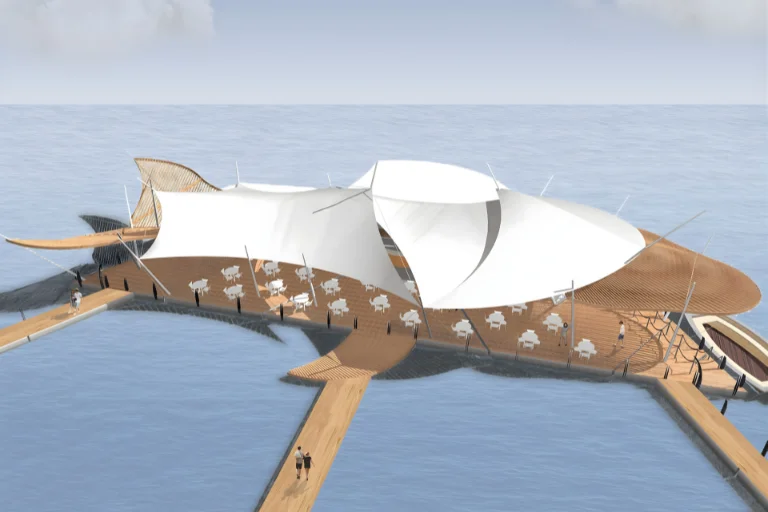
Located on the coast of Bávaro, this conceptual project proposes an open-water dolphinarium situated about 100 meters offshore between the beach and the coral reef, as part of the attractions at the Manatí Park complex. The design called for a floating modular net enclosure, accessible only by boat from a dock on the beach. The proposal includes basic visitor facilities—reception, café, showers, and restrooms—in lightweight, removable structures, designed to minimize environmental impact and allow for removal in the event of hurricanes. The complex is designed as a system of natural pools within the sea, where tourists can swim and interact with dolphins in an open environment, avoiding the controversial practice of keeping the animals in enclosed tanks on land. Recreational areas and a bar were arranged on modular aluminum pontoons with synthetic wood decking, while the roof, constructed with stainless steel-tensioned sails and specialized cables, takes on the iconic shape of a dolphin. In addition, autonomous operating systems—solar panels, wind generators, water tanks, and safety equipment—are planned to ensure self-sufficiency and a low ecological impact. The project aims to combine innovation, sustainable tourism, and an immersive experience with marine mammals. In the end, only the pools and docks were built as part of the project.
Services
Design of an artificial island for a dolphin habitat
Services
Design of an artificial island for a dolphin habitat
Located on the coast of Bávaro, this conceptual project proposes an open-water dolphinarium situated about 100 meters offshore between the beach and the coral reef, as part of the attractions at the Manatí Park complex. The design called for a floating modular net enclosure, accessible only by boat from a dock on the beach. The proposal includes basic visitor facilities—reception, café, showers, and restrooms—in lightweight, removable structures, designed to minimize environmental impact and allow for removal in the event of hurricanes. The complex is designed as a system of natural pools within the sea, where tourists can swim and interact with dolphins in an open environment, avoiding the controversial practice of keeping the animals in enclosed tanks on land. Recreational areas and a bar were arranged on modular aluminum pontoons with synthetic wood decking, while the roof, constructed with stainless steel-tensioned sails and specialized cables, takes on the iconic shape of a dolphin. In addition, autonomous operating systems—solar panels, wind generators, water tanks, and safety equipment—are planned to ensure self-sufficiency and a low ecological impact. The project aims to combine innovation, sustainable tourism, and an immersive experience with marine mammals. In the end, only the pools and docks were built as part of the project.


Next Project