Cabo Rojo
Cabo Cabo Rojo, Pedernales, República Dominicana 2024
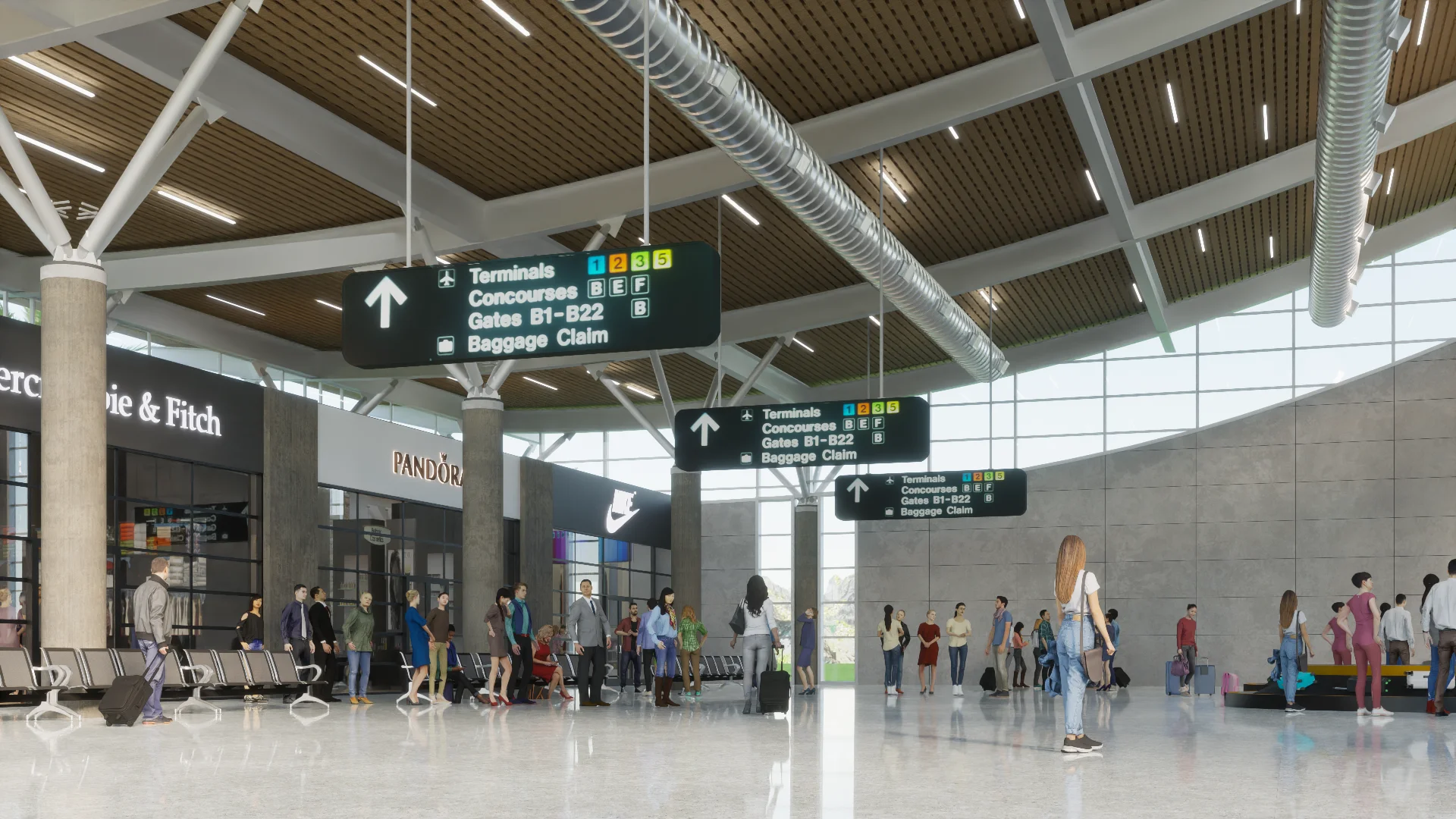
Cabo Rojo International Airport is part of the Pedernales tourism development master plan, designed to support the area’s hotel expansion. The architectural design, based on the winning proposal from the master plan competition, calls for a modular infrastructure that can be expanded in phases without interrupting operations. The first phase includes four boarding gates, with provisions for expansion as demand grows. Inspired by the natural surroundings, the undulating rooflines evoke ocean waves, while the use of local stone in the cladding and columns—which open like palm fronds—reinforces the tropical character. The design combines metal elements and synthetic wood for solar control and natural ventilation, with open areas at check-in similar to those found in other Caribbean airports, and climate-controlled spaces in boarding lounges and in immigration and baggage claim areas. The proposal is tailored to the region’s arid climate and its focus on tourism, optimizes passenger flow, and enhances the travel experience. High-traffic flooring and energy-efficiency standards round out a design that aims to be functional, representative, and scalable, in line with the vision for sustainable development in Bahía de las Águilas and its surrounding area.
Services
Architectural Design
Services
Architectural Design
Cabo Rojo International Airport is part of the Pedernales tourism development master plan, designed to support the area’s hotel expansion. The architectural design, based on the winning proposal from the master plan competition, calls for a modular infrastructure that can be expanded in phases without interrupting operations. The first phase includes four boarding gates, with provisions for expansion as demand grows. Inspired by the natural surroundings, the undulating rooflines evoke ocean waves, while the use of local stone in the cladding and columns—which open like palm fronds—reinforces the tropical character. The design combines metal elements and synthetic wood for solar control and natural ventilation, with open areas at check-in similar to those found in other Caribbean airports, and climate-controlled spaces in boarding lounges and in immigration and baggage claim areas. The proposal is tailored to the region’s arid climate and its focus on tourism, optimizes passenger flow, and enhances the travel experience. High-traffic flooring and energy-efficiency standards round out a design that aims to be functional, representative, and scalable, in line with the vision for sustainable development in Bahía de las Águilas and its surrounding area.


Next Project